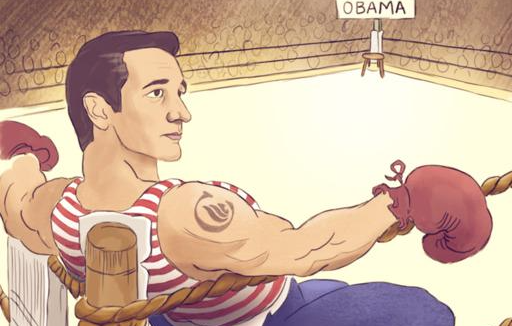
Sunday, March 6, 2016

Hillary and Bernie give Diet Advice

Hillary and Bernie have been making parallel, but different messages.  We have seen versions of this--in diet books.


Bernie and Hillary are each describing a problem in America, and they have somewhat similar villains and solutions.    The simple way to think of it is that Hillary is liberal/progressive and Bernie is very liberal/progressive.

That would be wrong.  They aren't two degrees of the same thing.  They have different messages.

I have read dozens of diet books over my adult lifetime.   Atkins, South Beach, Stillman, Paleo, China Study, Why We Get Fat, the Zone, and lots more.   Those books on food give some useful insights on the difference between Hillary's message and Bernie's.

Let me start with a premise:   On the surface Hillary is the more "qualified" candidate for president than Bernie, in the sense that she has been on the national stage longer, has the mix of domestic and foreign policy credentials in her work, and that she is part of a huge and successful political network that got her husband elected and which stayed active in the post presidency.  And her politics are about in the center of the Democratic party.  Meanwhile, Bernie Sanders is a newcomer to the party, is positioned to the left side of the party and the very left of the nation as a whole.

Yet Hillary is underperforming all expectations and Sanders is over performing.   He is apparently doing something right and Hillary something wrong.

Bernie's message is not simply a stronger, more-left version of Hillary's.  They are different messages.


Bernie's message is the need to break the structural advantages given to the financial and special interest establishment.   It is about social class and campaign finance.   We are being screwed by the elites who have gamed the system and perpetuated their control through the use of lavish campaign spending that has put into place a docile congress, which acts on behalf of the elites.   The fact that Hillary's main asset--her deep involvement in the levers of political power and political money--makes her an ideal opponent.   From Bernie' point of view Bernie is clean, Hillary is dirty.   Bernie says the problem is the billionaires and their agents, who have rigged the system.   We are good, we are victims, and the problem is the outside ourselves, unless you happen to be a billionaire   He says that billionaires shouldn't vote for him.   He has an external enemy.  


Hillary says the problem is ourselves.  It is a matter of self control.  We sabotage ourselves with our prejudices and our foolish policies on policing and drugs and unequal pay and college access and campaign finance.  Her campaign slogan is "Fighting for us" and she positions herself as a warrior in a lifelong struggle for progressive causes, taking on the various enemies, foreign and domestic, which have held us back from a country in which every individual and group has access to prosperity and happiness.   When asked to list her "enemies" she included Republicans, for which she was roundly criticized by Republicans.   But it makes sense for Hillary because the impediments to change are internal.  

On the surface Hillary's is the better argument, the one easier to accept since supposedly we have the power to be fit and healthy.  We have self government and power to create our own successes and failures.  We could stop discriminating against women and people of color and we could police more fairly and generally change our laws for the better.    Bernie says the problem is outside ourselves: them, the billionaires and their agents.

Bernie has the easier argument to make and to hear. If this were a diet book, Bernie's would be saying that your accumulation of fat problem is carbs, nothing but carbs, bread and rice and sweets and starch and problems outside ourselves.   Or, for the heart-oriented diet books, the problem is animal fat.  Be a vegan and clean out your arteries.   In all these successful sellers the dieter is good and the problem is external. 
Bern those bad billionaire carbs

Hillary's is saying that the problem is internal, that we have bad habits with food.  The power to change is within us.  We have self government and self control.  We can change our college loan repayment rules.  We can change our policing and sentencing policies.  We can change if we exercise self control and serious sense of purpose.  Eat less, eat better.  Eat green vegetables.  We can do this by changing our lifestyles.    Although theoretically it is empowering, in fact it is a criticism of us.  We are racist, we discriminate against women, we have inadequate health care laws. (We eat potato chips .  We eat ice cream.  We eat prime rib.)


No one likes to hear implied criticism.  Worse, she is a flawed messenger of that message because she is a practitioner within the system of bad habits, in fact previously on the boards of the nation's biggest grocer, Walmart, and the biggest meat provider, Tyson.   It would be one thing to be encouraged to take control of our own nutrition (or self government) by someone who was an organic vegan ascetic someone who exemplifies non-venality, a Jerry Brown maybe, but Hillary and Bill became multi-millionaires enjoying the fruits of the system so has flawed credibility as someone telling us we can change our lifestyle.  

Experienced dieter
It would be like the Chris Christie diet book.  He might have a lifetime of experience dieting and lots of qualifications to speak about diets, but he would have zero credibility.  Hillary understands the system of crony capitalism, political favors, campaign financing, and how to make incremental change, but she has no real credibility as a reformer of that system.   She grew too rich within it.

Hillary will likely win the nomination.  She earned it.  She played the game well for 50 years. But she is underperforming because she is telling us the problem is us, the solution is us, that she can lead us.  There is something about this that rings false to many voters.   And besides, Bernie is saying the problem is the billionaires, and few voters are billionaires.


Saturday, March 5, 2016

Candidate tax policy. Trump is no threat.

Democrats wish, Republican fear

Let's take a quick look at tax policies to see why Trump is in fact no threat to the financial elites of the country.

Tax policy is very important to a few people who write checks or write opinion pieces.  They pay attention to the fine print of tax policy, although most voters do not.   Average voters act on the basis of having a gut sense of whose side the candidate is on.   Trump condemns the self serving crony capitalism of  business and political elites, taking the side of the average American who has been hurt by their bailouts, their campaign contributions, and their offshoring of factories.  

Trump is lucky in his enemies.  The connection between Trump and the voters is amplified by the condemnation of Trump by the political establishment, most recently by Mitt Romney.   Mitt Romney is a gift to Trump.  The self-satisfied straight laced self serving political/economic elites, epitomized by Romney,  don't like Trump.   The people who want to cut or privatize Social Security and Medicare while they enjoy hedge fund tax loopholes condemn Trump.  Fine.  It helps make Trump's point.

But a close look at the tax plans of the remaining viable candidates show that while the political elites may be unhappy the business and financial elites of the country will be able to work with Trump.   If Trump is the nominee, Trump can consolidate the party, because on the big issue of taxes, Trump takes good care of his peers.


Hillary and Bernie: taxes go up a little if you are rich.

Hillary's surcharges kick in at incomes above $5,000,000 a year but Bernie's are pretty much across the board increases of 2.2% in tax rates across the board, with higher rates at the highest levels.   Both of them increase capital gain tax rates.   Both raise the estate tax rates by increasing the percentage rate while lowering the threshold for when it kicks in down to $3.5 million from $5 million.  More people will pay it and they will pay more.

Hillary increases the alternative minimum tax rate to 30% for people earning over $1 million a year.   Bernie adds back a 6.2% Social Security tax on incomes over $250,000 a year, which would push marginal rates to well above 50%.

Bottom line:   "Middle class" Americans  (incomes below $250,000) will see little change by Hillary but Bernie would raise taxes a little.   The top 1% would pay rather more, however, especially under Bernie's plan.   This all fits with voter's gut feel about Democrats: they will raise taxes a little, especially if you are rich, and that is a fair assessment.


Trump, Cruz, Rubio, and Kasich will lower everyone's tax, especially if you are rich, who will see them lowered a lot.

The intention in each of their tax plans is to assist businesses and "job creators" by lowering their taxes, and to allow the tax free inheritance of wealth.

Trump drops tax rates so they top out at 25% (down from 40%), cuts the corporate rate to 15%, and ends the estate tax.

Cruz has a value added tax, which complicates things, but cuts the income tax on everyone to a flat 10%.  He cuts the rate on dividends and interest to 10% and ends the estate tax.

Rubio lowers tax rates across the board on ordinary income but leaves the current structure of graduated income tax in place.  However, he cuts the tax on interest and dividend income to zero--a big item--and ends the estate tax.

Kasich lowers tax rates on individuals and businesses back to 28%, lowers the capital gains rate to 15%, and ends the estate tax.

Takeaways to remember:

Hillary will raise your taxes if you are seriously rich, Bernie if you are upper middle class or richer.   No surprise.

All the Republicans cut taxes for the richest 1% and especially the very richest.  The big taxes for the seriously rich are investment income and the estate tax which are cut or eliminated.   Republicans cut taxes for the rich, calling them job creators and true American success stories, whose wealth will grow the economy and trickle down.  No surprise.
Trump voters in Nevada--the force the GOP must reckon with

The big surprise is Trump.  The wealthiest Americans have nothing to dislike about the Trump tax policy.   Trump is creating a revolution in the GOP by breaking the orthodoxy that policies that help the financial elites also help the average American, thus dividing the GOP coalition.  But Trump's argument is about crony capitalism, immigration, and trade protection, not taxes or "trickle down."  Trump has fanned the flames of distrust of the elites by the middle class, but Trump is not planning on actually taxing away part of their wealth to bring equality.   American greatness will come from new trade practices, he argues, not redistributionist tax policies.

The political establishment has a problem: the voting half of the coalition is taught to distrust the money half, and candidates who count on the K Street donations to advertise social conservative messages to the voters have a problem.   But it is a campaign and messaging problem for orthodox GOP politicians, not for Trump.   Trump's tax policies are orthodox trickle down.   


More data for people who want the details on tax policy here:    http://taxfoundation.org/comparing-2016-presidential-tax-reform-proposals

Friday, March 4, 2016

Last Night's Debate: Who has the Biggest Penis

People who watched ten minutes of the debate last night came away with an impression.

I think the big thing that happened last night was the the experience of 3 children bickering in the back seat of a car, while a 4th sat on the side wearing earphones and reading a book.  It wasn't a hard hitting review of policy; it was nasty little personal jabs, with the Fox News moderators poking sticks at the kids, keeping the squabbling going.  Trump, Cruz and Rubio were the squabblers.   Kasich was on the side, behaving.


Auditioning for VP
Kasich looked like a good vice president.  

Kasich on the ticket would fill out the 'experience' part of the Nominee's resume and it might get them Ohio's electoral votes.  Kasich didn't burn any bridges last night.   Kasich might be able to bear standing two steps back and two steps to the left of the president with more patience than did poor Chris Christie standing miserably behind Trump.   Sad for Christie.

But there is little evidence so far that voters want decorum.  They appear to want an angry fighter.  They have rejected decorum in candidate after candidate, but now Kasich is the one remaining choice for people who want presidential decorum in the current version of standard Republican orthodox George W. Bush style of Republican.  Remember, the Republican coalition combines the trickle down economic policies of the rich (lower marginal tax rates, free trade, less worker protection, lower regulation, no-mass-deportation) with the traditional social values sentiments of the voting masses (anti-abortion, pro-Christian, anti gay,  fear and resentment of non-whites and immigrants). 
Mild mannered

Kasich is the remaining standard orthodox good Republican in the mold of George W. Bush.   Rubio is the young, attractive Tea Partyish version of the same thing--more aggressive, faster talking, more angry, more absolute in his language.  The young firebrand, but an orthodox firebrand.   Kasich is mild and conversational in tone and he communicates that he is a compassionate conservative, echoing George W. Bush.   Kasich is very conservative and he used state power to bury abortion providers with so much state regulation nearly all have closed in Ohio and he reduced access to voting by reducing absentee and early voting and reduced the number of polling places in urban areas .  This will increase already long wait-times to vote, which will suppress voting of targeted opponents.  This was done cleverly, amid talk of cost savings, not intentional voter suppression.  Kasich achieves hard partisan results but with a soft tone, making him acceptable to moderate voters turned off by naked partisanship voiced by the other three candidates.

So Kasich staked out his turf: the nice guy.

Meanwhile the other three were fighters.  It has stopped being sublimated or spoken in code.

Since Rubio is the young orthodox firebrand it leaves room for Cruz to be the very very conservative Christian firebrand.  Rubio is more interventionist, Cruz more careful about getting the US into regime change, but the real difference is that Cruz is unabashedly Christian in his search for a constituency, and Rubio is simply very Christian.   They don't differ very much on policy; they differ on tone.   Cruz is angry and mean; Rubio is more optimistic.   But these differences in policy were irrelevant last night.   We didn't see a debate, we saw a shoving match.

 have commented in the past that there was a "Testosterone Primary" going on, with Trump, Christie, Cruz, Rubio all attempting to seem most Putin-like, with Sarah Palin praising Putin and criticizing Obama's "mom jeans" and Christi referring to Obama as a "feckless weakling."   One dimension of this contest was each candidate attempting to appear most bellicose.   


 Trump is saying that he would torture people the Geneva Convention be darned,  Rubio saying he would joyfully wage a war of civilizations, and Cruz that he would carpet bomb whole areas and make sand glow in the dark, each uttered in the strongest most resolute voice possible.

It has gone beyond sublimation, disguise, or code, tough talk about killing people in the Middle East.   It has become about manliness.

Dog urinate on fire hydrants and telephone poles to mark their presence, each reaching as high up the pole as possible, seeing alpha status because the higher up the scent the bigger and more dominant the dog.   An anthropologist watching this struggle for head chief in some tribe or clan would immediately understand from the posturing and body language that the rivals were using manliness as a proxy for strength and dominance.  

It has become junior high.

Trump repeatedly referred to Rubio as "Little Marco" in the days prior to the debate and again in the debate, said with a sneering tone.  For several days Rubio had been returning fire, making sneering mention of the size of Trump's hands, overtly suggesting that hand size correlated to penis size and that Trump was lacking, or over-compensating, or something unmanly.  Trump, who has a very young ex-model wife,  and whose previous wife told the tabloids that Trump was the best sex she ever had, something Trump did not deny, rose to the bait this week, and asserted in town halls that he has very nice hands.  


In the debate last night, it got better--or worse-- with Trump assuring America that his penis is large enough to be president.

Trump:   "He referred to my hands, if they're small, something else must be small.  I guarantee you there's no problem. I guarantee it."

One cannot parody this by exaggerating it, because the simple truth is already parody.   

Cruz is mocking Trump, saying he is a fraud, his businesses are embroiled in lawsuits, that he certainly has bombshells hidden in his interview with the New York Times and in his tax returns.   I charge you with guilt.  Prove you are innocent, he says.  


 Cruz still has drawings of himself on his website, buffed up with upper body muscle mass.   His prepared closing remarks at the debate were addressed to America's warriors, foreign and domestic.   In the strongest most steadfast tone, he said to the fighting men in the armed services that he was a supporter and to our police forces, he had their back: Cruz, the Commander in Chief.
Steroidal Cruz

There were intermittent glimmers of policy debate that flickered through last night's debate, but the evening was not about policy.   It was a physcal-ed class squabble for dominance, with Cruz, and Rubio attacking Trump, and Trump attacking back.  My memory of junior high school fights is that they gathered a spirited and cheering crowd and that the kids admired the courage of the fighters.   The fighters "got in trouble" for fighting but they came out of it with higher status for having fought.   Maybe nothing has changed.  If Kasich rises in the polls then it is possible that people of voting age are different from boys at Hedrick Junior High School and they are grown up enough to prefer the boy doing his schoolwork.   We will see.

The bystanders at last night's debate each had their role: Fox egged them on, and the live audience clapped and cheered the insults.   But like back at Hedrick Junior High in my memory there were also the cautious "good kids" who hung back not wanting to get beat up if the fight spread into the spectators and not wanting to "get in trouble" when the grownups came running.  They may well be out there in the TV audience.

The voters are the grownups, who like the gym teachers might come running to say to grow up.   Or not.   The three fighters seem not to be punished in the polls for their behavior.   Voters may not want to stop this fight.


Thursday, March 3, 2016

Romney: Trump is a Fraud

Mitt Romney has released an advance copy of what he will say in Utah today:

"Donald Trump is a phony, a fraud.  He's playing the American public for suckers."


Every candidate I watched up close relied on magic and unicorns and pixie dust for their policies to make sense.  

The first piece of magic is slight of hand.   As I wrote yesterday, the Republican coalition attempts to hold together groups whose economic interest are very different.  The orthodox establishment coalition links financial elites seeking free trade, financial and business deregulation, lower labor protection, and lower marginal taxes with the mass of voters whose economic interests are confounded by those policies but who are pulled into the coalition with discussion of abortion, guns, traditional white Christian identity politics.  


Cruz Website:  Cruz will "abolish the IRS".  Simple!
The second piece of magic is levitation, doing the impossible.  All Republican candidates promise tax cuts for everyone.  Republican orthodoxy requires tax cuts for everyone.  But so is balancing the budget.  And so is increasing the military.   And so is paying down the debt.   Simultaneously.  And that is the magical thinking in the middle of the core Republican argument: you can have it all, painlessly and without sacrifice.

Meanwhile, Hillary Clinton and Bernie Sanders make their own argument in favor of a kinder, gentler, more generous country, with both sharing core planks of an improved America:
   ***less expensive or free higher education
   ***re-negotiate the interest rates on student loans
   ***more comprehensive access to health care for the poor
   ***comprehensive immigration reform
   ***greater regulation--or breakup--of financial firms
   ***more progressive taxation


Hillary: Enact immigration reform.  Simple!
Bernie and Hillary speak as if each of these policies had not been attempted and faced utter opposition and intransigence by Republican majorities or filibustering minorities.  This isn't complicated.  It isn't as though those ideas had not been thought of or proposed.   They were blocked.  Obama used up every bit of political capital and good will that he had in order to attempt a partial health care overhaul.  It cost him Democratic majorities in Congress, which have dug in so deeply that Obama cannot fill uncontroversial ambassador appointments, much less Supreme Court appointments.   Bernie and Hillary talk about the better world to come, not the trench warfare a Democratic president would face.


Bernie Sanders Website:  He will simply demand the wealthy pay their fair change.  Simple!

So the criticism of Donald Trump comes in the middle of an environment that is awash with magical thinking.   This helps Trump, because there is no candidate who presents as a candidate of practical realism, describing hard truths.   No one talks of blood, sweat, tears, and toil, and the audiences don't want to hear it anyway.   (I watched Lindsey Graham attempt to justify a bit of sacrifice as the cost of military safety, and he couldn't fill a conference room, much less a basketball arena.)  There is no market for hard truths so there is no candidate advancing it.   So Trump isn't either.

Trump had branded himself as the person who will cut through barriers.  Is it magical?  Sure.  Just like everyone else.   Trump is nudging the brand to call himself the "common sense conservative", a general election moderate, in contrast to the ideologically rigid conservative, Ted Cruz.    Trump isn't the fraud-candidate; he is the "common sense" candidate.

 So I do not expect Romney's charge that Trump is "a phony, a fraud" to hurt Trump because magical unrealism is the centerpiece of every candidate's story.  Trump is simply the common sense magician.


Wednesday, March 2, 2016

Trump, the Progressive

Trump is repositioning for the general election.   He is an economic progressive now.


(You can "Follow" me by putting your email address up there to the right in the box.  This way you get an email in the middle of the night seeing whatever new things were added to the blog.  It's home delivery!  Free, easy, and reversible.)

Trump's victory speech last night displayed a new Trump, with new focus.   Trump described himself as a unifier:   "We’re going to be a much bigger party. We’re going to be an expanded party. We’re going to win in November."    He spoke of the Republican party being a large, dynamic party, with huge turnouts.  He sounded like a party leader.


Last Night
Watch it yourself.  Trump sounds charming, magnanimous, genuine, a kinder, gentler Trump: http://goo.gl/JAJLj8

The most important thing Trump did, though, was make a progressive argument describing the American economy.  The old established Republican coalition has been held together by hypocrisy.  The Republican party of several decades and most recently of Romney-Ryan aggressively courted the votes of working and middle income voters by talking about traditional values social conservative issues (gay rights, crosses in parks, War on Christmas, abortion, guns, home school, etc.) while carrying out the economic policies of economic and political elites.   They said we need to cut marginal taxes for the richest so we can have growth.  We need to cut business and environmental regulation.  We need benefits-austerity.   But don't worry, wealth trickles down, they said.  Only rich people can hire workers, Romney assured voters.  Revise Social Security and Medicare so they become less generous so we can afford to cut taxes, Paul Ryan said. America will be better for it.

Except that trickle down didn’t work. America got richer, but the wealth went to the top 1/10th of 1% and stuck there.   The average American is no richer than he was 30 years ago, inflation adjusted.   

Last night Trump did not focus on the threat from below to the middle class who may want to share in government benefits: immigrants, blacks, Muslims,  the poor.   Trump focused up, at the rich.   The same direction as is Bernie Sanders and Hillary Clinton are focusing.

Trump’s victory speech last night attacked, by name, corporations who moved factories to Mexico, Ford and Nabisco.  He called on Apple to build the I-phone here.  He has positioned himself as the direct defender of the interests of struggling Americans over the interests of Wall Street and K Street.  He has exposed the hypocrisy in the old Republican formula.  The rich are not on your side.   He is re-shaping the Republican party.  


Bernie punches up at the billionaires
 Trump argues for the middle class at least as well as Bernie, and better than Hillary.  Progressives who expect to vote Democratic may be blinded to this, but Trump is sounding like a progressive.  But he is a xenophobe and quasi racist, some think.  He cannot be a progressive, one might say.   But remember: Teddy Roosevelt and Woodrow Wilson were gleefully racist.  You can be an economic progressive and exclude black and brown people from the tent of inclusion.)    

Bernie talks about "social class."   A lot of Americans are uncomfortable with naming economic classes.  Americans like to think there is no class system here, that there is social mobility, and that nearly everyone is--or could be--middle class.   Besides, to my ear Bernie sounds like someone who read Karl Marx literature in college--something which would surely be exploited if he were to be the nominee.   Trump speaks for “American workers” versus corporations who put their interests ahead of those of working Americans.  And Bernie sounds unrealistic with “free education.”  Trump seems more plausible with a 35% tariff on Ford.  Is it actually plausible?  I don't know, but Trump seems confident, of course, and few people understand tariffs and everyone knows that free college would be a political and economic stretch.

Hillary talks of making America “whole again” and says wages have stagnated.   Trump dismissed this, saying he has no idea what “whole again” means and that in any case she and her team have been there for 8 years and she hasn’t done anything and it is time to try something new.   Trump exposed a vulnerability for Hillary when she ties herself to Obama.  She had her turn. There are still problems.  Now it is time for something new.

Hillary Clinton is making the unity, end the division of people, we are all in this together argument.  This is the "establishment" position and it is eerily like the traditional Republican argument.   We need to partner with Wall Street, and regulate it better.

Trump's actual policies are unclear but his tone and mood is utterly clear:  These people are bad and he is going to fight them.

Trump says he fights Wall Street and K Street because their interests are not the same as those of the regular people.  Teddy Roosevelt made this argument 110 years ago: regulate and break up the trusts and protect the workers with child labor and work week standards.  

Trump is making a progressive argument.  He has turned toward the general election.  Possibly it is too early for him to do this.  He isn't the Republican nominee yet.   The knives are out for Trump and he is being attacked by his Republican opponents.   And look what they are saying.   They say he isn't a conservative.   They say he is a progressive.   They are right.

Tuesday, March 1, 2016

Republican Voter Resentment

Trump understood it and said it:  No one reads the National Review.   They are losers.

But I read it.   I want to see the opinions that float around the Republican think tank-donor-
RNC establishment.   The group is small in size but is hugely influential because they pay the bills for campaigns.   Their lobbyists attend the fundraising events for incumbents, and sometimes they write the draft legislation. They testify at hearings.  They fund "grass roots" organizations that supply citizen input on policy.  They are the permanent institution underlying the coming and going of elected officials.     

In defeat they are the safety net for politicians by keeping a Jobs Bank for out of work Republican officeholders and campaign people, a comfortable form of welfare for the comfortable.   Lose an election, no problem.   You stay visible as a "Senior Fellow" for some organization like the Cato Institute or the American Enterprise Institute or the American Heritage Foundation, so you have a platform to legitimize your writing a book and being on a panel on a cable news show.   It is job security--for the orthodox only.
"Last Chance" means STOPPING Trump


The National Review hates Trump, and it dedicated a whole issue to stopping him.   He isn't orthodox and he is redefining what is heresy or acceptable.   National Review is going crazy with frustration over Trump for having exposed the gap between Republican voters and Republican orthodoxy.  

***Republican orthodoxy is small government conservative, favoring cuts in safety net programs including Social Security and Medicare, but voters actually like benefits, and Trump agrees with voters.
***Republican orthodoxy is neo-con involvement in regime change and engagement, but the voters actually are pretty skeptical that we don't do more harm than good to America when we meddle, and Trump is with the voters.
***Republican orthodoxy for elites is that free trade and immigration is good, but voters resent immigrants.  This is Trump's signature position.
***Republican orthodoxy is that constitutionally limited and checked power is best, but voters actually like the idea of a strong president who can get things done.  That is Trump.
***Republican orthodoxy and practice has been for the party to be a party of obstruction, saying no to Obama on everything, especially health care, and to avoid actually making positive consensus proposals for replacing it, but voters want to know what Republicans are for, not just what they are against.  Trump projects he will get things done.

So Trump has captured that spirit of generalized frustration of the Republican primary electorate.   Here is how a current National Review article summarizes that spirit of resentment.  The purpose of the article is to attack Trump, but the article is most useful in its long list of irritations.   I count 21 points of resentment:

So far Trump’s supporters have put up with his hypocrisies, self-contradictions, and unhinged statements — as if all that is felt to be a small price for hearing him pulverize Washington careerists, media flunkies, hypocritical grandees, and Republican sellouts. 

Americans are sick and tired of Black Lives Matter careerists and abject racists calling them racists, of wealthy apartheid liberals lecturing them about their white-privileged middle-class status, of crony green capitalists with huge carbon footprints, of hypocritical multimillionaire Malibu scolds, of the media hectoring the 52 percent who pay income taxes and canonizing the 48 percent who do not, of illegal aliens laying down to them a set of ultimatums while praising the country they were glad to leave and ankle-biting the one they want to stay in, of elites worrying more about the feelings of Islamic radicals than the terrorism that jihadists commit, and of our elected representatives borrowing more money for more government programs that make things far worse for everybody except those who run them. 

If it is a choice between Washington Republicans’ sober and judicious tinkering and tsk-tsking on the one hand, and raw unadulterated anger on the other, the so-called base will choose the latter every time. The furious and fed-up may not like Trump’s cruelty, but the array of targets that he crudely lashes back at — John McCain, Megyn Kelly, Jeb Bush, the Pope, Vicente Fox — in their various ways themselves often are unpopular. When Vicente Fox cusses at Trump, when the Pope slyly questions his Christianity, when Megyn Kelly flirtatiously winks to her audience, when New York Times columnist Ross Douthat jokes about a possible Trump assassination, when the Chinese say they don’t welcome the idea of a Trump presidency, when a few screwball British members of Parliament dream of denying Trump entry into Britain — all of them only win Trump even more acclaim from hoi polloi. 

Read more at: http://www.nationalreview.com/article/432098/donald-trump-how-fight-him

Guest Post: Democrats are "Trump Country", Too


Peter Sage:   Thad Guyer is an attorney who represents whistleblowing employees, so he pays close attention to what kinds of messages are persuasive to judges and juries.  He follows this election from abroad, currently in Vietnam, so he is especially attuned to anti-immigration agitation--now riots--growing in Europe.  Since Thad is immersed in a foreign culture and trying to understand the thousands of ways one acts to "do things correctly", he has heightened awareness of the attachment a people have to their own culture and therefore to the discomfort--or anger--one experiences when newcomers arrive.    

In Vietnam there is a correct way to arrange different foods onto a plate, he has explained to me.  Correctly placed and separated, the food is delicious, but placed so they touch or mix the food is inedible and fit only for pigs.  It takes a generation or two or more for a person to understand a new culture and until then he can be understood as oafish, rude, hostile, or a deadly threat.   Nativist, culture protecting, politics shouldn't be a surprise, and the current crop of immigrants and refugees are entering countries already stressed by high unemployment and the aftershocks of the financial crisis.
Ethnic Boston's response to busing in of black schoolchildren

I have encouraged Thad's guest posts because that insight has helped him--and therefore us--better understand why audiences and voters have been attracted to nativist candidates around the world, and Trump here in the USA.   Thad's insights are shorter and easier to read than an academic version of the same thing, but Samuel B. Huntington's The Clash of Civilizations and the Remaking of World Order predicted that in the aftermath of the Soviet vs. West duel the next struggles in the world would be over religion and culture.   The battle in the Republican Party today is about exactly that.   And as I wrote yesterday in my observations about the ethnic tensions in Democratic Boston, and Thad writes today, this is a struggle which involves a big block of Democrats.  Hillary needs to watch out.  A lot of Democrats think Trump talks exactly the kind of common sense our leaders should be saying--and Hillary is not.


Here is Thad Guyer's Comment:


Here is a friendly amendment to your thesis statement: “Trump is re-aligning the Republican and Democratic parties, turning both from globalist coalitions with traditionalist voters into a populist nativist movement." Soon Democrats will have to come to terms with the reality that Trump is a cross-over candidate on his populist issues. Even six weeks ago he was already polling at least 20% support from Democrats, and some analysts think this could dramatically rise. (The Hill, http://goo.gl/okYZSf, 01/09/2016). “A new survey shows a sizable number of Democrats ready to defect from Hillary Clinton to Donald Trump”, said U.S. News & World Report in January. http://goo.gl/h0UlBH.

Trump’s unrelenting truism that “without borders we don’t have a country” has deep appeal regardless of party. More concerning, Hillary’s “don’t deport anybody” primary stance is going to be very tricky to get out for the general election, because if she doesn’t get out of it, the election will be Trump’s to lose. The daily migrant riots in Greece and France will only grow with media images of Muslim refugees attacking with battering rams and burning down encampments, and stoning police. The BBC, NYT and Washington Post are now regularly showing this dramatic "invasion" footage, and it only helps Trump. 

 
Mainstream media has missed, or been in denial, on every cue in understanding Trump from the start. The early myth that he was just a “white male” candidate has now been dramatically shattered by primaries showing growing support not only among white women, but across educational and income demographics. In summary within the Republican electorate in Florida now: “He leads with 51% of men, 51% of younger voters, 49% of moderates, 43% of somewhat conservative voters, 41% of seniors, 39% of women, and 39% of very conservative voters. There's not a single group we track he doesn't have a double digit lead with.” “Trump leads Rubio Even Head To Head in Florida”, (Public Policy Polling, 2/25/2016), http://goo.gl/V7SEKh. Think that is worrisome? He would probably win against Hillary in New York too. “Could Donald Trump Beat Hillary Clinton In New York?”, (Int’l Business Time, 2/29/2016) http://goo.gl/4UP0pQ.


Some Democratic analysts have been trying to sound the alarm that viewing and talking about Trump as just a Republican candidate is a misguided approach. “Donald Trump’s Strongest Supporters: A Certain Kind of Democrat”, Nate Cohn (NYT, 12/31/2015) http://goo.gl/SgxOIR


As Nate Silver warned yesterday:   But we may be entering a new era, and through the broader sweep of American history, there’s sometimes been quite a bit of voting across party lines. The table below reflects, in each election since 1952, what share of a party’s voters voted against their party’s presidential candidate (e.g., a Democrat voting Republican or for a third-party ticket). There’s a lot of fascinating political history embedded in the table, but one theme is that divisive nominations have consequences.”    (FiveThirty Eight, 2/29/2016) http://goo.gl/vWJwEL.
A warning to Cruz and Sanders supporters.  Look at the 1964 and 1972 wipeouts

The "nativists" aren't just the Republicans, as UpClose likes to remind us. They are the majority of the American electorate. The sooner Hillary is done with Bernie the better—so she can turn right and move back to the center where she belongs, and where Democrats will best be positioned in the epic battle to come against Donald Trump. .